


When spring arrives, equipment that’s been sitting all winter has to move from idle to productive fast. Spring weather windows can be short and unpredictable, making preventable breakdowns especially disruptive. Many early-season problems begin with issues that are easy to overlook during storage, so a spring service checklist acts as a reminder before your workload ramps up.
Start With a Machine-by-Machine Game Plan
Begin with organization. Make a list of every machine that needs to be ready first. Then, for each unit, review the following:
- Total hours
- Age and service history
- Notes from last season
- Any known issues that still need attention
Pull the operator’s manual and service records so maintenance intervals are easy to verify. Then rank equipment by urgency.
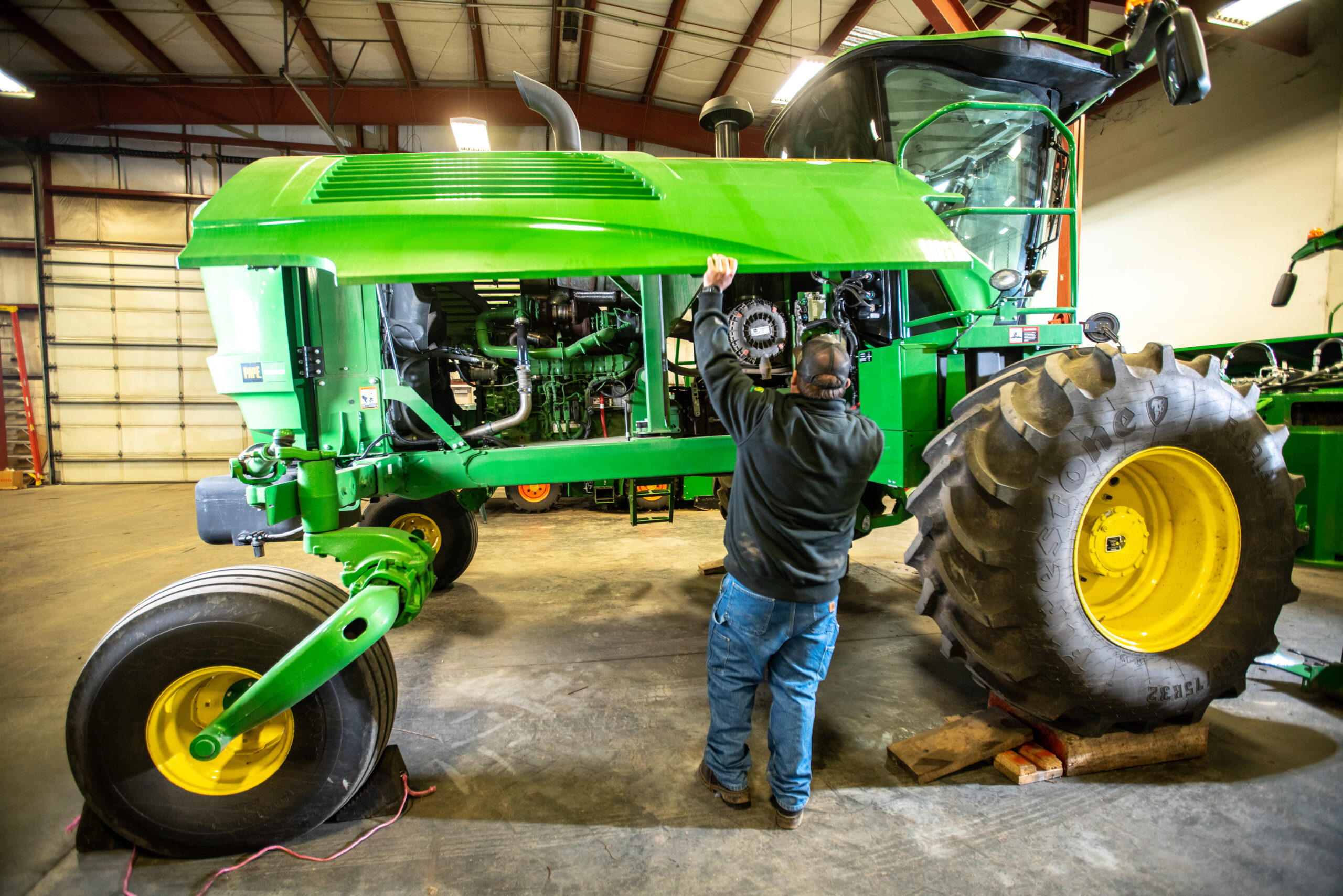
Check Fluids, Filters, and Engine Health
This is one of the most important parts of any pre-season maintenance routine.
Start with engine oil. Check the level, inspect the condition, and confirm whether the machine is due for service.
Then, inspect the oil, air, and fuel filters. A dirty or restricted filter can affect startup, performance, and fuel efficiency before the work even begins.
Move next to coolant, hydraulic fluid, and transmission fluid. Confirm levels are correct and look closely for signs of contamination or discoloration. As you work through each machine, take a slow walk around it and check for leaks. Pay close attention to:
- Hoses
- Fittings
- Seals
- Cylinders
- The ground beneath parked equipment
A small leak during spring prep can become a much larger problem once the machine is back in regular use.
Test Batteries and Electrical Systems
Few problems are more frustrating than a no-start issue on the first busy spring morning. Begin with the battery. Clean terminals, examine cables, and check for corrosion or loose connections.
Then check the rest of the electrical system. Confirm that lights, flashers, gauges, monitors, and warning indicators are all working properly. If startup has been inconsistent, review the starter, alternator, and visible wiring. Reliable electrical performance supports more than starting—it also impacts visibility, operator safety, and machine monitoring throughout the day.
Inspect Tires, Brakes, and Drivetrain Components
Shift your attention to the machine’s ability to move, stop, and handle jobs safely. Inspect tires for wear, sidewall cracking, punctures, damage, and inflation pressure. On wheeled machines, check hardware and watch for looseness or visible wear around the wheel assemblies.
Test brakes before the machine returns to regular use. Review drivetrain and moving components for wear and lubrication. On equipment that collected mud and other debris, clean problem areas thoroughly and look for any components that were hidden underneath.
These checks are important on tractors, utility vehicles, mowing equipment, and other machines that depend on traction, braking, and stable handling every day.
Review Implements, Attachments, and Hydraulic Connections
Spring readiness involves more than the power unit. Implements and attachments deserve the same attention before first use. Focus on common wear points such as:
- Blades, teeth, and tines
- Belts and chains
- PTO shafts and shields
- Hydraulic couplers and hoses
- Grease points and pivot joints
Confirm quick-attach systems are functioning properly and that hydraulic connections are clean, secure, and ready for use. A worn belt, damaged shield, or loose coupler can turn into an in-season failure fast. Taking care of those smaller issues before first use helps keep the schedule intact once work is underway.
Make Sure the Cab and Precision Ag Tech Are Ready
A complete spring service routine should also include the operator environment and any onboard technology. Wash off dirt, dust, and residue to improve visibility and reduce buildup around cooling components. Clean radiator screens and check for restricted airflow.
Inside the cab, inspect air filters, mirrors, wipers, HVAC performance, seat adjustments, and operator controls. If the machine uses guidance systems, displays, receivers, or other precision ag technology, power everything up before the season starts. Confirm the system is communicating correctly, scan visible wiring, and back up settings or seasonal data if needed.
A few minutes spent checking those systems now can save valuable time later when fieldwork is moving.
When to Bring in the Papé Machinery Ag & Turf Service Team
Some parts of pre-season equipment maintenance are easy to handle in-house. Others make more sense to address with trained technicians and the right diagnostic tools. Recurring fault codes, hydraulic issues, transmission concerns, inconsistent startup problems, and larger repairs should be handled before peak season arrives.
Getting ahead of service in late winter or early spring is far easier than reacting to downtime once your schedule is full. With full-service shops, mobile support, parts availability, and experienced technicians across California, Idaho, Hawaii, Nevada, Oregon, and Washington, Papé Machinery Ag & Turf is always close by when your equipment needs more than a routine inspection.
Power Up Your Owner Support
John Deere delivers a connected experience for homeowners, farmers, and large-scale operations. With one account, you can access your fleet through tools like Operations Center, Equipment Mobile, and Shop.Deere.com—making it easy to manage maintenance, purchase parts, and view real-time machine data. With the addition of Operations Center PRO Service, you can also handle advanced diagnostics, repairs, and software updates, helping reduce downtime and keep your equipment running efficiently. Learn more at Data Management | Equipment Mobile | John Deere.