


Harvest season can sneak up on you when you’re preoccupied with day-to-day work. That’s why preventive maintenance is one of the most valuable priorities on the schedule. A small issue might be easy to overlook early on, but when harvest season arrives, that small issue can cause the whole operation to grind to a slow crawl.
When every hour in the field counts, preparation is what keeps you moving.
Start with a Full Fleet Walkaround
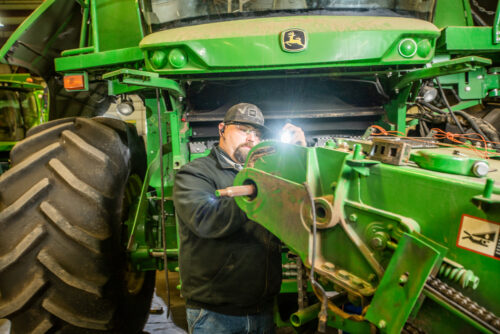
A good harvest prep plan starts with a slow, detailed walkaround. Look at every machine that plays a role in the season.
Your inspection should include:
- Tractors, combines, headers, and balers
- Mowers, rakes, windrowers, and hay tools
- Gator utility vehicles, loaders, and support equipment
- Wagons, trailers, and implements
Look for leaks, worn hoses, cracked belts, damaged guards, loose hardware, cracked welds, and missing shields. Check tire pressure, tread wear, sidewalls, and wheel hardware. For tracked machines, inspect track condition, tension, rollers, and undercarriage components.
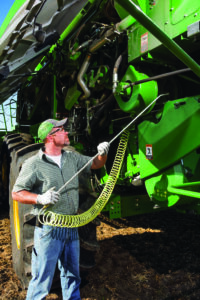
Cleaning matters, too. Dust, dirt, chaff, and crop residue can hide damage, affect cooling, and increase fire risk around hot components.
Check Fluids, Filters, Batteries, and Cooling Systems
Long harvest days put extra strain on engines, hydraulics, drivetrains, and cooling systems. Focus on the basics first:
- Engine oil and hydraulic fluid
- Coolant level and condition
- Transmission and final drive fluids
- Fuel filters and air filters
- Battery charge, terminals, and cables
- Grease points and lubrication intervals
Follow manufacturer-recommended service intervals for each machine. Record service by date, machine hours, and operator notes.
Give Harvest Equipment Extra Attention
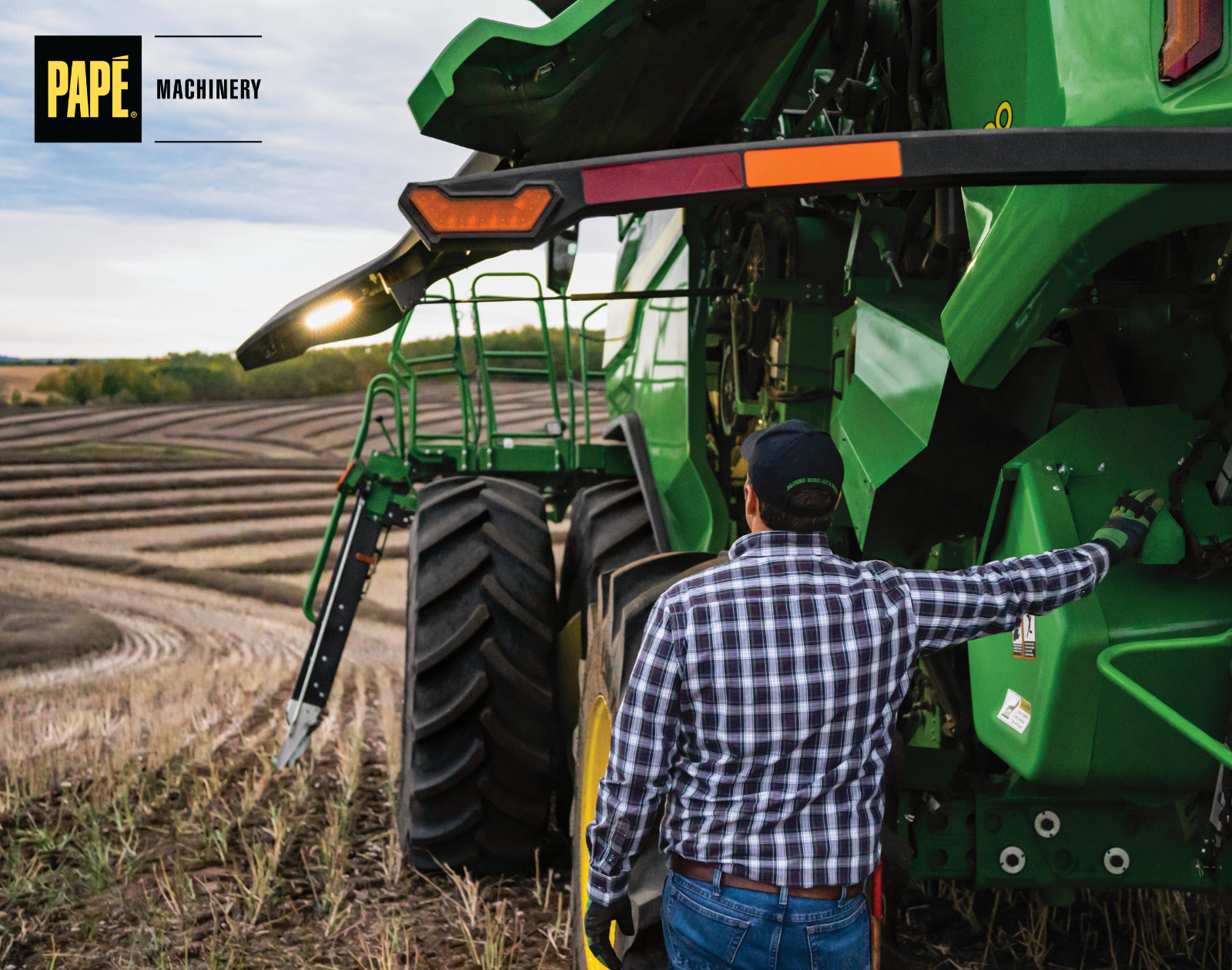
Harvest equipment includes complex systems that must work together smoothly. Combines, headers, balers, and handling equipment need a closer inspection before the first long day in the field.
On combines, pay close attention to belts, chains, pulleys, bearings, augers, grain tanks, unloading systems, sensors, concaves, sieves, and threshing components. Inspect headers for knives, guards, draper belts, reel components, row units, and settings.
Fire prevention should also be part of the inspection. Remove debris around engines, exhaust components, bearings, belts, and other heat sources. Keep fire extinguishers charged and mounted where operators can reach them quickly.
Order Parts Before the Rush
Preventative maintenance works best when there is enough time to fix what you find. After inspections are complete, make a list of required repairs, likely wear items, and necessary backup parts. Useful items may include:
- Belts, bearings, and filters
- Cutting components and blades
- Hydraulic hoses and fittings
- Grease, fluids, and lubricants
- Electrical connectors and fuses
- Hardware, pins, and fasteners
Our parts teams can help identify the right components for John Deere tractors, combines, hay equipment, sprayers, turf equipment, and mixed fleets. Ordering early also gives you more room to plan around installation, shop time, and operator schedules.
Prepare Technology and Precision Ag Systems
Modern harvest prep goes beyond mechanical service. With the growing integration of precision ag systems, things like displays, receivers, monitors, sensors, guidance systems, yield mapping tools, cameras, lights, and cab controls all need to be ready before operators depend on them.
Check for software updates, confirm subscriptions, review field data, calibrate sensors, and test communication tools ahead of time. Make sure operators know how to use the systems assigned to them, especially if workflows have changed.
Schedule Service Before Harvest Peaks
Before the next harvest rush begins, connect with your local Papé Machinery Agriculture & Turf location to schedule preventative maintenance, order parts, or get expert service support for the equipment your operation depends on.