

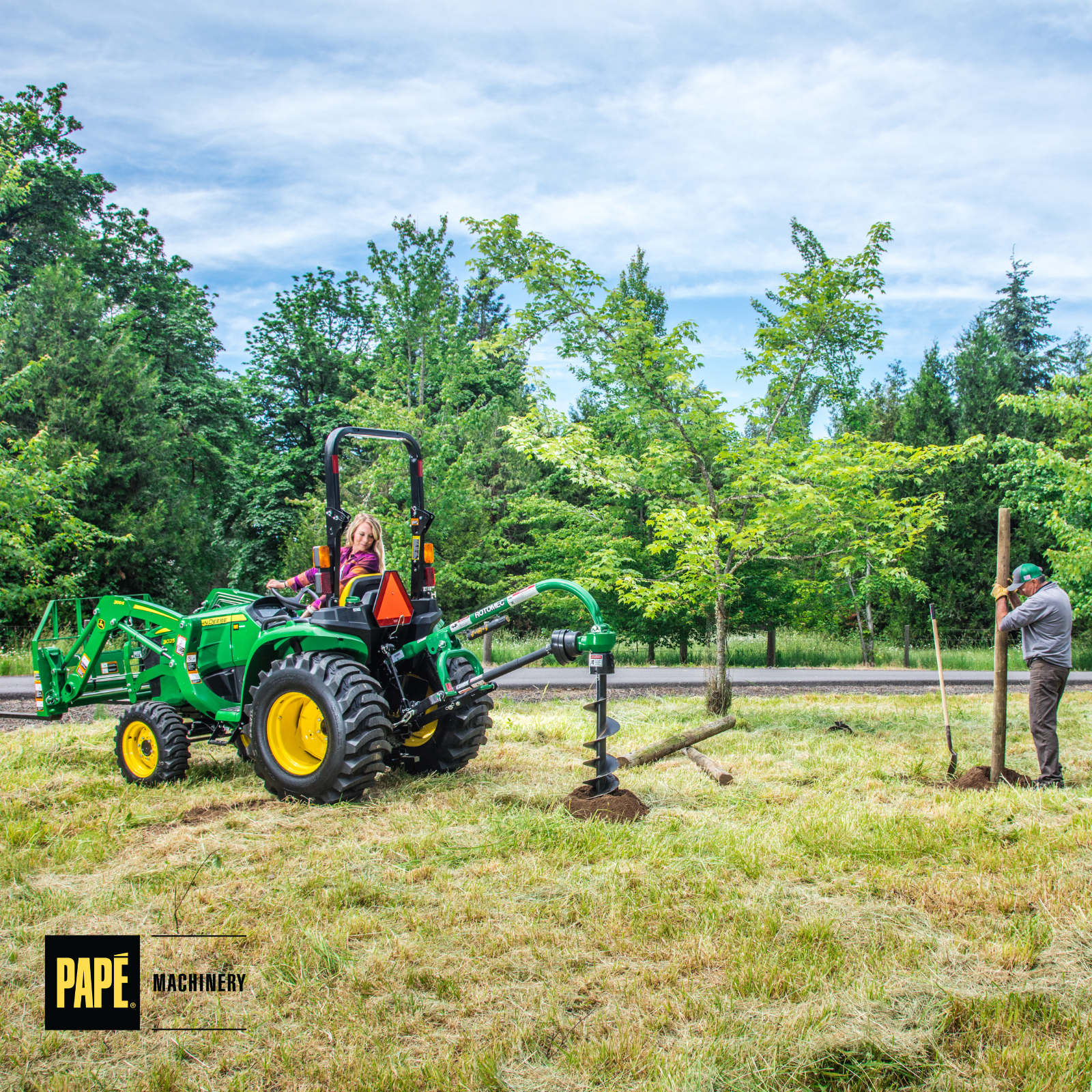
A new tractor is one of the most important investments you’ll make for maintaining your property—whether you own one acre or a large farm. The right machine delivers years of productivity and uptime. The wrong one can cost you time and money season after season. To ensure you make the best decision, here are the four critical factors you must evaluate before making your final decision.
Match Horsepower to Your Workload
Choosing horsepower based on price alone, whether over-buying or under-buying, is the most common mistake tractor shoppers make. Instead, your first step should be aligning power capabilities to the tasks you’ll be using the tractor for.
| Acreage / Use | Recommended HP | Common Applications |
| 1–10 acres | 25–50 HP | Mowing, light loader work |
| 10–50 acres | 50–75 HP | Hay, grading, mid-size loader |
| 50–200 acres | 75–125 HP | Tillage, baling, spraying |
| 200+ acres | 125–200+ HP | Row crop, large tillage, hauling |
One important distinction: Engine HP is what the motor produces. PTO HP, or the power delivered to your implements, runs an average of 15 to 20% lower. When sizing for mowers or balers, always match the equipment’s PTO requirement, not based on the engine rating.
When it comes to horsepower, consider planning for future needs, but avoid overbuying beyond what your applications require.
Choose the Right Transmission
Your transmission affects everything from loader precision to full-field efficiency. There’s no universal best option — it depends on how you work.
| Type | Best For |
| Hydrostatic (HST) | Small acreage, mowing, loader work — easy foot-pedal control |
| Power Shuttle | Frequent forward/reverse tasks like loader and skid steer work |
| Power Shift / CVT | Larger operations needing road travel and reduced operator fatigue |
For landowners with under 50 acres doing primarily mowing and loader work, a hydrostatic transmission offers the most intuitive control. For row crop and hay producers covering 100+ acres, a Power Shift or CVT pays dividends in comfort and efficiency over a long day.
Don’t Overlook Hydraulic Capacity
Your tractor’s hydraulic system is what puts your implements to work. Lift capacity and hydraulic flow rate determine which attachments you can run now and in the future.
| Hitch Category | Lift Capacity | Typical Tractor Size |
| Category 1 | Up to 4,400 lbs | Compact (25–60 HP) |
| Category 2 | Up to 11,000 lbs | Utility (60–130 HP) |
| Category 3 | Up to 17,000 lbs | Large utility / row crop |
Typical lift capacity ranges vary by manufacturer and configuration.
If you plan to run hydraulic-driven implements — planters, bale processors, or grain carts — pay close attention to hydraulic flow and the number of selective control valves available. Upgrading hydraulics after purchase is costly and often impractical. Know your implement requirements before you shop.
Evaluate Total Cost of Ownership
The purchase price is just the starting point. The true cost of ownership includes financing, maintenance, parts, and the quality of support behind the machine.
| Cost Factor | What to Consider |
| Financing | Current incentive rates; manufacturer 0% offers |
| Warranty | Standard powertrain coverage; extended service options |
| Maintenance | Fluid and filter intervals; service accessibility |
| Parts Availability | Local stock; lead times on common wear items |
| Dealer Support | Proximity; technician training; response time |
| Resale Value | How the brand holds value at 5 and 10 years |
Why Papé Machinery Ag & Turf?
Choosing the right tractor is only half the equation. Who stands behind it matters just as much. At Papé Machinery Ag & Turf, we’re built to support your operation at every stage:
- Sales: Our ag equipment specialists take time to understand your land, your workload, and your budget before making a recommendation — no pressure, no guesswork.
- Service: Our factory-trained technicians are equipped to diagnose and repair quickly, minimizing downtime when you need to be in the field.
- Preventative Maintenance: Scheduled maintenance programs keep your equipment running at peak performance season after season, protecting your investment for the long haul.
- Parts Availability: With an extensive in-stock parts inventory, we get you back up and running fast, without the wait times that can derail a critical work window.
We’re more than a place to buy equipment. We’re a long-term partner invested in the success of your operation.
Ready to Find the Right Tractor?
The right tractor for your neighbor’s operation might be the wrong choice for yours. Acreage, terrain, soil type, and workflow all play a role — and we’re here to help you sort it out.
Explore the Papé Machinery Ag & Turf website to browse inventory, explore financing, or connect with one of our ag equipment specialists.
Your New Tractor Comes with Powerful Online Support
John Deere delivers a connected experience for homeowners, farmers, and large-scale operations. With one account, you can access your fleet through tools like Operations Center, Equipment Mobile, and Shop.Deere.com—making it easy to manage maintenance, purchase parts, and view real-time machine data. With the addition of Operations Center PRO Service, you can also handle advanced diagnostics, repairs, and software updates, helping reduce downtime and keep your equipment running efficiently. Learn more here.